




March is Reading Month. The Flint Center for Educational Excellence is committed to helping Flint Kids improve their literacy skills to ensure their future academic and career success. An important aspect of the Flint Center’s focus on literacy is early grade reading skills.
Early grade reading is a critical gateway to long-term opportunity. Students who read proficiently by third or fourth grade are more likely to graduate from high school, pursue education beyond high school, and earn wages that support themselves and their families. Yet nationally, progress remains uneven. In 2024, only 31% of fourth-grade students performed at or above the National Assessment of Educational Progress (NAEP) proficient level in reading.
In the early elementary years, students transition from learning to read to reading to learn. This shift determines whether students can fully learn academic content across all subjects and stay on track toward future success.
Early grade reading also has broad economic implications. Research estimates that increasing adult literacy to at least a sixth-grade reading level could add $2.2 trillion in total annual income across the United States. Strengthening early literacy systems helps communities build a skilled workforce, grow local economies, and reduce long-term public costs.
In Flint, approximately 8% of elementary and middle school students and 11% of high school students tested at or above proficient in reading, according to U.S. News & World Report, compared to statewide where 38.9% of fourth-grade students read at or above the National Assessment for Educational Progress proficiency level.
In both Flint and statewide, Black and Latino students from low-income backgrounds and students with disabilities, are hit hardest, falling as much as 10 percentage points below the statewide average on both third-grade reading and seventh-grade math tests. Fewer than one in five Black students were proficient in third grade reading, according to the 2024 M-STEP annual assessment.
The Flint Center for Educational Excellence addresses these challenges directly and indirectly through its six core initiatives, working with schools, families, and the community at large to build an educational ecosystem that ensures Flint kids don’t just survive, they thrive.
From birth to age five, the Flint Center partners with the Flint Early Childhood Collaborative through Educare Flint, utilizing a two-generational approach to learning and literacy that connects parents with the resources they need and promotes family literacy preparing children for success in the K-12 educational system and beyond.
When children enter the K-12 environment, the Flint Center directly addresses reading skills and literacy during the school day through the Network for School Excellence.
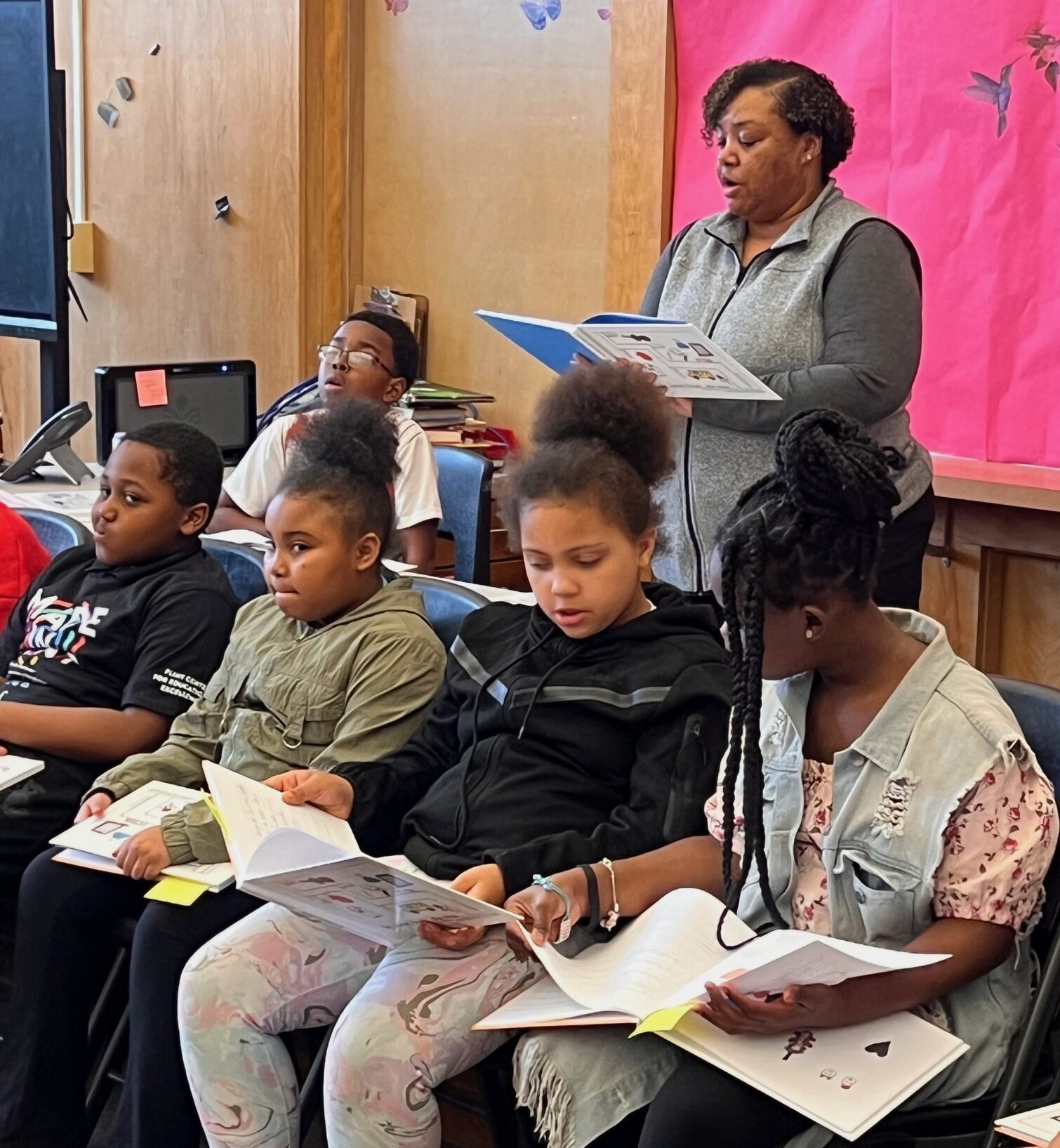
The Network for School Excellence puts literacy tools directly in the hands of classroom teachers and provides them with evidence-based professional development training. Network schools are also part of the Reading Rangers program, a partnership with Springboard Collaborative that brings teachers, parents, and students together as partners in literacy teaching and learning. Early results of the Reading Rangers program show that all of the children who participated improved in reading skills with 46% reading at or above grade level.
Additionally, embedded in the Thrive Afterschool programming is a curriculum that reinforces reading and literacy skills learned during the school day, including creative writing activities, book clubs, and storytelling.
This multi-pronged approach that provides direct services to the child, engages the family, and partners with educators creates an educational ecosystem focused on the whole child.
The Flint Center’s work to strengthen early grade reading is a powerful contribution to the national cradle-to-career movement. Across the country, communities in the StriveTogether Cradle to Career Network are investing in children and families during the earliest and most important years of development. As part of StriveTogether, the Flint Center is part of a national movement focused on improving early literacy to build the foundation students need to succeed in school and pursue long-term economic opportunities.